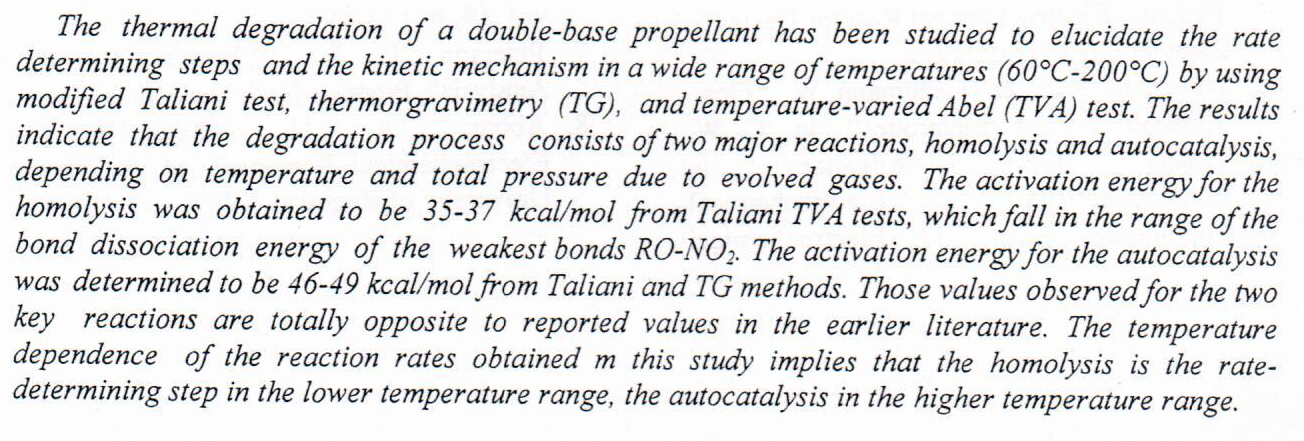
Kinetic Mechanism on Thermal Degradation of a Nitrate Ester Propellant

Beyond the immediate content of speech, the voice can provide rich information about a speaker's demographics, including age and gender. Estimating a speaker's age and gender offers a wide range of applications, spanning from voice forensic analysis to personalized advertising, healthcare monitoring, and human-computer interaction. However, pinpointing precise age remains intricate due to age ambiguity. Specifically, utterances from individuals at adjacent ages are frequently indistinguishable. Addressing this, we propose a novel, end-to-end approach that deploys Mozilla's Common Voice dataset to transform raw audio into high-quality feature representations using Wav2Vec2.0 embeddings. These are then channeled into our self-attentio
... Show More

Deconstructionism opened the door wide to multiple readings and restore the reader his authority that he lost in the modernism, thus became more able to decipher the plastic discourse through reconstruction according to what he wants or what the plastic discourse gives him of possibilities beyond consumerism and thus the author has been canceled. The problem of the current research is limited to the following question: does deconstructionism in postmodern arts have a role in teaching the artistic tasting for the learner? The aim of the current research is to reveal the deconstruction work mechanisms in postmodern arts and their role in teaching the artistic tasting for the learner. As for the theoretical framework, the first section focu
... Show More
 (17)
(17)
 (10)
(10)

This study investigates the possibility of using waste plastic as one of the components of expired lead-acid batteries to produce lightweight concrete. Different percentages of lead-acid battery plastic were used in the production of lightweight concrete. The replacements were (70, 80 and 100%) by volume of the fine and coarse aggregate. Results demonstrated that a reduction of approximately 23.6% to 35% in the wet density was observed when replacement of 70% to 100% of the natural aggregate by lead-acid battery plastic. Also, the compressive strength decreased slightly with the increase in plastic content at different curing ages of 7, 28, 60, 90, 120 days. The lowest value of compressive strength was (20.7 MPa) for (wa
... Show More
(1)
(22)
(27)
(22)
Non-thermal (low-temperature) plasma may act as an alternative approach to control superficial wound and skin infections when the effectiveness of chemical agents is weak due to natural pathogen or biofilm resistance. In this paper an atmospheric pressure plasma needle jet device which generates a cold plasma jet is used to measure the effectiveness of plasma treatment against different pathogenic bacteria and to test the individual susceptibility of pathogenic bacteria to non-thermal argon plasma. It is found that, Gram-negative bacteria were more susceptible to plasma treatment than Gram-positive bacteria. For the Gram-negative bacteria Pseudomonas aeruginosa, there were no survivors among the initial 1x10⁸C.F.U (Co
... Show More
(4)
Mortar of ordinary Portland cement was blended with cockles shell
powder at different weight ratios to investigate the effect of powder
admixture on their strength and thermal conductivity. Results showed
that addition of cockles shell powder at 50% of mortar weight
improves hardness and compressive strength notably and reduces the
thermal conductivity of the end product. Results suggest the
possibility to incorporate cockles shell powders as constituents in
cement mortars for construction and plastering applications.
(3)
Critical buckling temperature of laminated plate under thermal load varied linearly along the thickness, is developed using a higher-order shape function which depends on a parameter ‘‘m’’, which is improved to obtain results for thin and thick plates. Laminated plates’ equations of motion are obtained using virtual work principle and solved for simply supported boundary conditions. Angle and cross laminates thermal buckled mode shapes with different E1/E2 proportion, number of plies, (α2/α1) proportion, aspect ratios, are investigated. It is observed that this shape function gives thermal buckling for thin and thick plates but with m = 0.05 that agree well with other theories and linear distribution of temperature giv
... Show More
(2)
The aim of the research is to present and discuss the subject of the budgeting estimates and how to activate the role of the Federal board of supreme audit in examining these estimates through reference to Articles 6 and 10 of the Federal board of supreme Law, which did not restrict Federal board of supreme in Preventive control on examination process for planning which is prepared from the government units, as the result of a large amount of government units Provisions and the weakness of estimates in most of its items, which rely on personal assessment and not based on scientific and logical basis of the estimate, which leads to the emergence of a deficit is not true in the general budget and this seems clear in most Iraq
... Show More