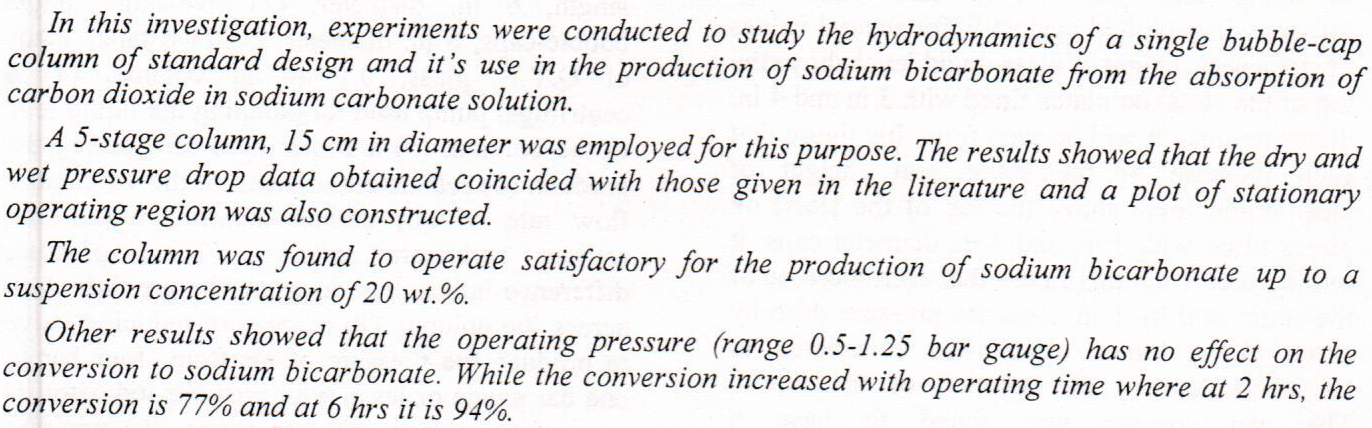
A Study of Absorption Column with Single Bubble Cap Tray in the Production of Sodium Bicarbonate

This paper presents a hybrid genetic algorithm (hGA) for optimizing the maximum likelihood function ln(L(phi(1),theta(1)))of the mixed model ARMA(1,1). The presented hybrid genetic algorithm (hGA) couples two processes: the canonical genetic algorithm (cGA) composed of three main steps: selection, local recombination and mutation, with the local search algorithm represent by steepest descent algorithm (sDA) which is defined by three basic parameters: frequency, probability, and number of local search iterations. The experimental design is based on simulating the cGA, hGA, and sDA algorithms with different values of model parameters, and sample size(n). The study contains comparison among these algorithms depending on MSE value. One can conc
... Show More (2)
(2)
 (1)
(1)

 (17)
(3)
(17)
(3)

Alpha shape theory for 3D visualization and volumetric measurement of brain tumor progression using magnetic resonance images
(35)
(30)
Environmental pollution is experiencing an alarming surge within the global ecosystem, warranting urgent attention. Among the significant challenges that demand immediate resolution, effective treatment of industrial pollutants stands out prominently, which for decades has been the focus of most researchers for sustainable industrial development aiming to remove those pollutants and recover some of them. The liquid membrane (LM) method, specifically electromembrane extraction (EME), offers promise. EME deploys an electric field, reducing extraction time and energy use while staying eco-friendly. However, there's a crucial knowledge gap. Despite strides in understanding and applying EME, optimizing it for diverse industrial pollutant
... Show More
(5)
(4)
(39)
(34)
The current study included the isolation, purification and cultivation of blue-green alga Oscillatoria pseudogeminata G.Schmidle from soil using the BG-11liquid culture medium for 60 days of cultivation. The growth constant (k) and generation time (G) were measured which (K=0.144) and (G=2.09 days).
Microcystins were purified and determined qualitatively and quantitatively from this alga by using the technique of enzyme linked immunosorbent assay (Elisa Kits). The alga showed the ability to produce microcystins in concentration reached 1.47 µg/L for each 50 mg DW. Tomato plants (Lycopersicon esculentum) aged two months were irrigated with three concentrations of purified microcystins 0.5 , 3.0 and 6.0
... Show More
(7)
(3)
(6)
Background: Diabetes mellitus consists of a group of diseases characterized by abnormally high blood glucose levels. Glycated haemoglobin (HbA1c) is a form of haemoglobin used to identify the average concentration of plasma glucose over prolonged periods of time. It is formed in a non-enzymatic pathway by normal exposure of hemoglobin to high levels of plasma glucose, The main alterations observed in the saliva of Type 1 diabetic patients are hyposalivation and alteration in its composition, particularly those related to the levels of glucose. The aim of the present study was to assess the effect of Glycated haemoglobin level on the level of salivary glucose which may have an effect on oral health condition. Materials and methods
... Show More
(2)
Expanded use of antibiotics may increase the ability of pathogenic bacteria to develop antimicrobial resistance. Greater attention must be paid to applying more sustainable techniques for treating wastewater contaminated with antibiotics. Semiconductor photocatalytic processes have proven to be the most effective methods for the degradation of antibiotics. Thus, constructing durable and highly active photocatalytic hybrid materials for the photodegradation of antibiotic pollutants is challenging. Herein, FeTiO3/Fe-doped g-C3N4 (FTO/FCN) heterojunctions were designed with different FTO to FCN ratios by matching the energy level of semiconductors, thereby developing effective direct Z-type heterojunctions. The photodegradation behaviors of th
... Show More
(39)
(40)
Phosphorus‐based Schiff base were synthesized by treating bis{3‐[2‐(4‐amino‐1.5‐dimethyl‐2‐phenyl‐pyrazol‐3‐ylideneamino)ethyl]‐indol‐1‐ylmethyl}‐phosphinic acid with paraformaldehyde and characterized as a novel antioxidant. Its corresponding complexes [(VO)2L(SO4)2], [Ni2LCl4], [Co2LCl4], [Cu2LCl4], [Zn2LCl4], [Cd2LCl4], [Hg2LCl4], [Pd2LCl4], and [PtL
... Show More
(46)
(25)