Preferred Language
Articles
/
ijcpe-531
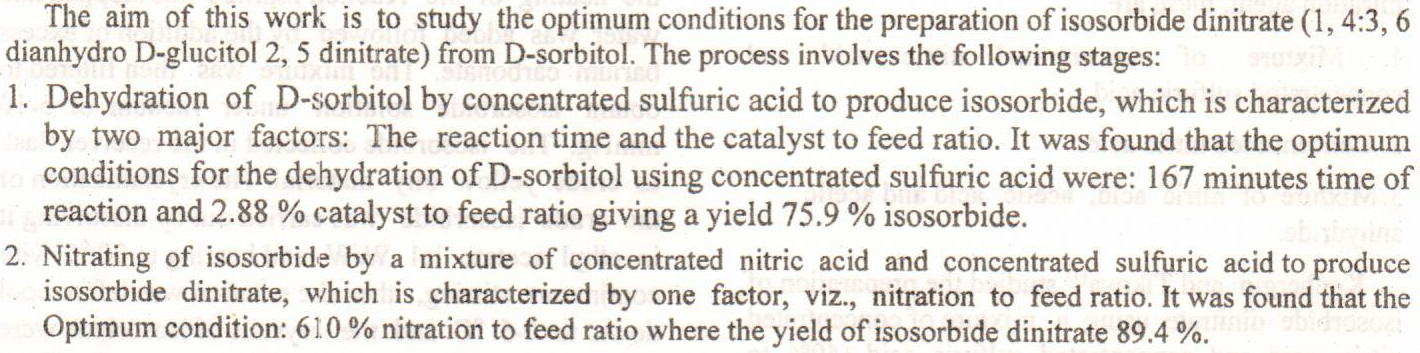
The Preparation of Isosorbide Dinitrate
...Show More Authors

View Publication Preview PDF
Quick Preview PDF
Publication Date
Sat Jun 30 2012
Journal Name
Al-kindy College Medical Journal
Bowel Cleansing Quality in Morning Versus Evening Preparation Regimens for colonoscopy; a Prospective Study
...Show More Authors

Background :Evening preparation for colonoscopy is often unsatisfactory and inconvenient. This study was performed to compare the efficacy of bowel preparation at two different timings: night before and morning of endoscopy and to compare the cecal intubation rate and disturbance of sleep hours between these two groups.
Methods: In this prospective randomized endoscopist- blinded trial, 150 patients were enrolled between March 2010 and August 2011. Patients aged between 18 to 80 years needing colonoscopy were included. Patients with prior bowel surgery, suspected bowel obstruction or those who didn't completely fulfill the preparation instructions were excluded. Patients received polyethyelen glycol electrolyte preparation in a mornin

... Show More
View Publication Preview PDF
Publication Date
Sat Mar 30 2013
Journal Name
Iraqi Journal Of Chemical And Petroleum Engineering
Preparation and Formation of Zeolite 5A from Local Kaolin Clay for Drying and Desuphurization of Liquefied Petroleum Gas
...Show More Authors

This work deals with preparation of zeolite 5A from Dewekhala kaolin clay in Al-Anbar region for drying and desulphurization of liquefied petroleum gas. The preparation of zeolite 5A includes treating kaolin clay with dilute hydrochloric acid 1N, treating metakaolin with NaOH solution to prepare 4A zeolite, ion exchange, and formation. For preparation of zeolite 4A, metakaolin treated at different temperatures (40, 60, 80, 90, and 100 °C) with different concentrations of sodium hydroxide solution (1, 2, 3, and 4 N) for 2 hours. The zeolite samples give the best relative crystallinity of zeolite prepared at 80 °C with NaOH concentration 3N (199%), and at 90 and 100°C with NaOH concentration solution 2N (184% and 189%, respectively). Ze

... Show More
View Publication Preview PDF
Publication Date
Thu Dec 09 2021
Journal Name
Iraqi Journal Of Pharmaceutical Sciences ( P-issn 1683 - 3597 E-issn 2521 - 3512)
Preparation and In vitro Characterization of Aceclofenac Nanosuspension (ACNS) for Enhancement of Percutaneous Absorption using Hydrogel Dosage Form
...Show More Authors

         Aceclofenac (AC) is an orally active phenyl acetic acid derivative, non-steroidal anti-inflammatory drug with exceptional anti-inflammatory, analgesic and antipyretic properties. It has low aqueous solubility, leading to slow dissolution, low permeability and inadequate bioavailability. The aim of the current study was to prepare and characterize AC-NS-based gel to enhance the dissolution rate and then percutaneous permeability. NS.s were prepared using solvent/antisovent precipitation method at different drug to polymer ratios (1:1, 1:2, and 1:3) using different polymers such as poly vinyl pyrrolidone (PVP-K25), hydroxy propyl methyl cellulose (HPMC-E5) and poloxamer® (388) as stabilizer

... Show More
View Publication Preview PDF
Scopus (14)
Crossref (3)
Scopus Crossref
Publication Date
Sun Sep 15 2024
Journal Name
Iraqi Journal Of Pharmaceutical Sciences( P-issn 1683 - 3597 E-issn 2521 - 3512)
Preparation and In vitro/Ex vivo Evaluation of Nanoemulsion-Based in Situ Gel for Intranasal Delivery of Lasmiditan
...Show More Authors

Lasmiditan (LAS) was formulated as a nanoemulsion based in situ gel (NEIG)with the aim of improving its oral bioavailability via application intranasally. The solubility of LAS in oils, emulsifiers, and co-emulsifiers was determined to identify nanoemulsion (NE)components. Phase diagrams were constructed to identify the area of nanoemulsification. LAS NE was formulated using the spontaneous nanoemulsification method. Four NEs (F19, F24, F31, and F34) containing 7-15 % oleic acid (OA) as an oily phase, 40-55% labrasol (LR), and transcutol (TC) as emulsifier mixture at (1:1), (2:1), (3:1), and (1:2) ratio with 30-53 % (w/w) aqueous phase, having suitable optical transparency of 95–98%, globule size of 104-140 nm and polydisper

... Show More
View Publication
Scopus (6)
Crossref (6)
Scopus Crossref
Publication Date
Sun Dec 03 2017
Journal Name
Baghdad Science Journal
Synthesis New Liquid Selective Electrodes of Ciprofloxacin Hydrochloride for Determination Ciprofloxacin in Pure form and Pharmaceuticals Preparation.
...Show More Authors

New membrane electrodes for determination of ciprofloxacin hydrochloride were prepared depending on ciprofloxacin hydrochloride - phosphotungstic acid (CFH-PT) as an active material and these electrodes were made with three plasticizers: Di-octylphenylphosphonate(DOPH), Di-butyl phosphate (DBP)Tri-n-butyl phosphate(TBP), in PVC matrix. One of the ciprofloxacin electrodes was gave Nernstian slope equal to 57.21 mV/ decade for DOPH membrane with concentration range from 1.5×10⁻⁵ to1.0×10-1 M, and detection limit equal to 1.5×10⁻⁶ M .Lifetime was 93 days. Non- Nernstian responses equal to 39.40 and 30.70 mV/ decade for membranes DBP, TBP, respectively. These electrodes were gave concentration range from 1.0× 10⁻⁵ to 1.0×10⁻² and from 4.0

... Show More
View Publication Preview PDF
Scopus (9)
Scopus Crossref
Publication Date
Wed Jan 17 2018
Journal Name
Journal Of Engineering And Applied Sciences
PREPARATION, CHARACTERIZATION AND THERMAL ANALYSIS OF POLYMERIC BLEND NANOCOMPOSITES BASED ON PVA-PVPPEGDOPED WITH ZINC OXIDE NANOPARTICLES
...Show More Authors

Publication Date
Tue Jul 17 2018
Journal Name
Journal Of Global Pharma Technology
Preparation, Characterization and Biological Activity Studies of Some Metal Complexes with New Schiff Base for Trimethoprim Ligand
...Show More Authors

A new ligand complexes have been synthesis from reaction of metal ions of MnII , CoII , NiII , CuII , ZnII , CdII and PdII with schiff base [(E)-1-((2-amino-5-(3, 4, 5-trimethoxybenzyl) pyrimidin-4-ylimino) methyl) naphthalen-2-ol [HL)]. The prepared [HL] was characterized by FT-IR, UV-Vis spectroscopy, 1H13CNMR spectra Mass spectra and melting point. The compounds were characterized by techniques UV-Vis and FT-IR spectral studies, micro analysis (C.H.N), determination of atomic absorption, chloride content, molar conductivity measurements, magnetic susceptibility and melting point. The ligand acts as a monobasic tridentate, coordinating through deprotonated phenolic O and azomethine N atoms. The compounds are neutral electrolytic in dimeth

... Show More
Publication Date
Wed Sep 14 2016
Journal Name
Journal Of Baghdad College Of Dentistry
Microleakage of Pit and Fissure Sealants after Using Different Occlusal Surface Preparation Techniques: An In Vitro Study
...Show More Authors

Background: The marginal seal is essential for sealant success because penetration of bacteria under the sealant might allow caries onset or progression. The aim of the present study was to estimate and compare the microleakage of pit and fissure sealant after various methods of occlusal surface preparation. Materials and methods: Thirty non-carious premolars extracted for orthodontic reasons were equally divided into three groups. In group one, occlusal fissures were opened with round carbide bur, in group two, occlusal surfaces of the teeth were cleaned with a dry pointed bristle brush and samples of group three were cleaned with a slurry of fine flour of pumice in water using rubber cup. Then fissures of all teeth were etched using 35% p

... Show More
View Publication Preview PDF
Crossref
Publication Date
Thu Nov 30 2023
Journal Name
Research Journal Of Pharmacy And Technology
Preparation and Evaluation of Aceclofenac Solid Dispersion by Fusion Technique and Effervescent Assisted Fusion Technique: Comparative Study
...Show More Authors

Solid dispersion (SD) is one of the most widely used methods to resolve issues accompanied by poorly soluble drugs. The present study was carried out to enhance the solubility and dissolution rate of Aceclofenac (ACE), a BCS class II drug with pH-dependent solubility, by the SD method. Effervescent assisted fusion technique (EFSD) using different hydrophilic carriers (mannitol, urea, Soluplus®, poloxamer 188, and poloxamer 407) in the presence of an effervescent base (sodium bicarbonate and citric acid) in different drug: carrier: effervescent base ratio and the conventional fusion technique (FSD) were used to prepare ACE SD. Solubility, dissolution rate, Fourier transformation infrared spectroscopy (FTIR), PowderX-ray diffraction

... Show More
View Publication Preview PDF
Scopus (5)
Crossref (3)
Scopus Crossref
Publication Date
Sat Jan 01 2022
Journal Name
Desalination And Water Treatment
Preparation and application of polyethersulfone ultrafiltration membrane incorporating NaX zeolite for lead ions removal from aqueous solutions
...Show More Authors

View Publication
Scopus (35)
Crossref (29)
Scopus Clarivate Crossref


