Theoretical Analysis of Concentric Flow of Spherical Capsule in Laminar Flow
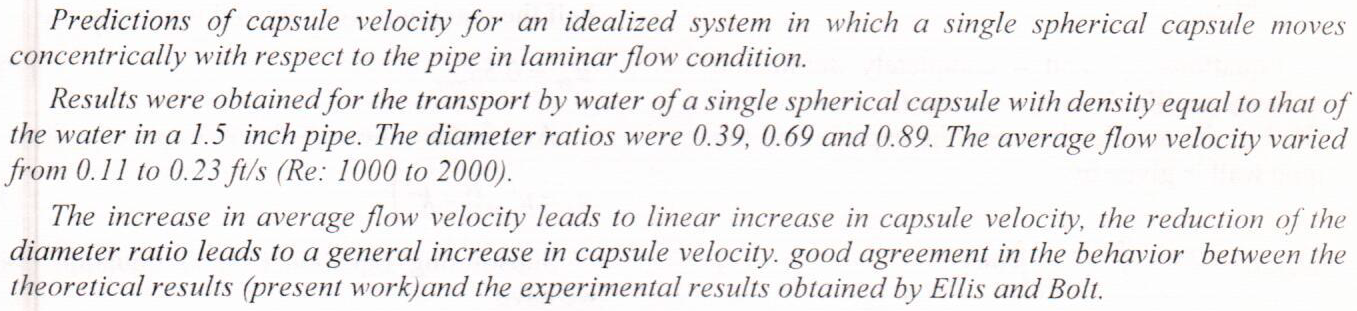

 (6)
(6)

FG Mohammed, HM Al-Dabbas, Science International, 2018 - Cited by 2
The data presented in this paper are related to the research article entitled “Novel dichloro(bis{2-[1-(4-methylphenyl)-1H-1,2,3-triazol-4-yl-κN3 ]pyridine-κN})metal(II) coordination compounds of seven transition metals (Mn, Fe, Co, Ni, Cu, Zn and Cd)” (Conradie et al., 2018) [1]. This paper presents characterization and structural data of the 2-(1-(4-methyl-phenyl)-1H-1,2,3-triazol-1-yl)pyridine ligand (L2 ) (Tawfiq et al., 2014) [2] as well as seven dichloro(bis{2- [1-(4-methylphenyl)-1H-1,2,3-triazol-4-yl-κN3 ]pyridine-κN})metal (II) coordination compounds, [M(L2 )2Cl2], all containing the same ligand but coordinated to different metal ions. The data illustrate the shift in IR, UV/VIS, and NMR (for diamagnetic complexes) peaks wh
... Show More
The meniscus has a crucial function in human anatomy, and Magnetic Resonance Imaging (M.R.I.) plays an essential role in meniscus assessment. It is difficult to identify cartilage lesions using typical image processing approaches because the M.R.I. data is so diverse. An M.R.I. data sequence comprises numerous images, and the attributes area we are searching for may differ from each image in the series. Therefore, feature extraction gets more complicated, hence specifically, traditional image processing becomes very complex. In traditional image processing, a human tells a computer what should be there, but a deep learning (D.L.) algorithm extracts the features of what is already there automatically. The surface changes become valuable when
... Show MoreMR Younus, 1998