Preferred Language
Articles
/
ijcpe-632
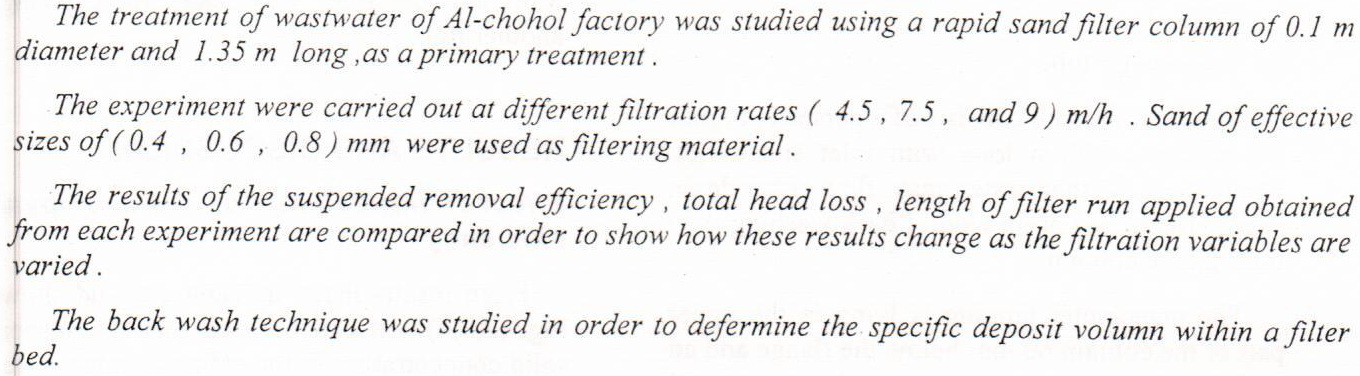
The Treatment of Wastewater of Alcohol Factory by Filtration as Primary Treatment
...Show More Authors

View Publication Preview PDF
Quick Preview PDF
Publication Date
Tue May 07 2019
Journal Name
Pain Research And Treatment
Efficacy of the LED Red Light Therapy in the Treatment of Temporomandibular Disorders: Double Blind Randomized Controlled Trial
...Show More Authors

Background. Temporomandibular dysfunction syndrome (TMD) is a common disease among dental patients. It occurs as a consequence of malfunction of the tempromandibular and/or surrounding facial muscles. LED red light therapy is not been well established, and it is important to find out the role of this technique in the treatment of temporomandibular disorders. Aim of the Study. To evaluate the efficacy of the LED red light in the treatment of the tempromandibular dysfunction syndrome. Material and Methods. Fifty students of the College of Dentistry/University of Baghdad with myofacial pain associated with Tempromandibular Disorder volunteered to participa

... Show More
View Publication
Scopus (9)
Crossref (6)
Scopus Clarivate Crossref
Publication Date
Wed Jan 30 2013
Journal Name
Al-kindy College Medical Journal
The efficacy and tolerability of 10mg and 20mg/day isotretinoinin the treatment of acne vulgaris in Iraqi patients
...Show More Authors

Back ground: Oral isotretinoin is recommended
for sever nodulocystic acne in the doses 0.5-
2mg/kg/day which is usually associated with higher
incidence of adverse effects. To reduce the
incidence of side-effects and to make it more costeffective,
the lower dose regimen of isotretinoin has
been used.
Aim: To compare the efficacy and tolerability of
oral isotretinoin 10mg and 20mg/day in acne
vulgaris.
Methods: one hundred and twenty patients with
acne vulgaris were randomized into two treatment
regimens each consisting of 60 patients. The first
was treated with 10mg/day and the second group
with 20mg/day for 24 weeks. Fifty five patients
from the first group and 47 patients from the second

... Show More
View Publication Preview PDF
Publication Date
Sun Jan 01 2023
Journal Name
Aip Conference Proceedings
Impact of geographical locations of the water treatment plants in Baghdad City on quality of supplied water
...Show More Authors

In this study, the water treatment plants located on the Tigris River within Baghdad city were subjected to qualitative and quantitative assessments. Based on location, the plants from upstream to downstream are Al-Karkh, East Tigris, Al-Karamah, Al-Wathbah, Al-Wehdah, Al-Kadiseyah, Al-Dora, and Al-Rashid. Data from 2009 to 2020 on the turbidity, total dissolved solids, Alkalinity, hardness, chloride, calcium, and temperature were used in the qualitative assessment while data on the treated water production and population served were used in the quantitative assessment. The above Data was acquired from the Municipality of Baghdad. The turbidity was mainly used as a fair gauge to assess the performance of the water treatment plants in Baghda

... Show More
View Publication
Scopus Crossref
Publication Date
Wed Jun 01 2022
Journal Name
Iranian Journal Of Chemistry And Chemical Engineering
The Thermal Pre-processing Technique of the Bio-waste for Contaminated Water Treatment: Histological and Experimental Study
...Show More Authors

The current study suggested a thermal treatment as a necessary proactive step in improving the adsorption capacity of bio-waste for contaminants removal in wastewater. This approach was based on the experimental and histological investigation of biowaste pods shell. This investigation showed that these shells compose of parenchyma cells that store secondary metabolites compounds produced from cells were exhibited in present study. The results also reported that these compounds are extracted directly from the cells as soon as they are exposed to an aqueous solution, hampering their use as an adsorbent material. The increase in the weight of bio-waste adsorbent at unit liquid volume increases the production of secondary metabolites compounds

... Show More
View Publication
Publication Date
Sat Dec 30 2023
Journal Name
Iraqi Journal Of Chemical And Petroleum Engineering
Evaluating Filtration and Thermal Stability of Water-Based Mud Using Green Synthesized Zinc Oxide Nanoparticles
...Show More Authors

   Nanoparticles (NPs) have unique capabilities that make them an eye-opener opportunity for the upstream oil industry. Their nano-size allows them to flow within reservoir rocks without the fear of retention between micro-sized pores. Incorporating NPs with drilling and completion fluids has proved to be an effective additive that improves various properties such as mud rheology, filtration, thermal conductivity, and wellbore stability. However, the biodegradability of drilling fluid chemicals is becoming a global issue as the discharged wetted cuttings raise toxicity concerns and environmental hazards. Therefore, it is urged to utilize chemicals that tend to break down and susceptible to biodegradation. This research presents the pra

... Show More
View Publication Preview PDF
Crossref (1)
Crossref
Publication Date
Sun Mar 01 2026
Journal Name
Ecological Chemistry And Engineering S
Elimination of Mixture of Dyes from Simulated Wastewater by Three-Dimentional Electro-Fenton Process: Utilising Alum Sludge as a Heterogeneous Fenton-Like Catalyst
...Show More Authors

As a result of industrial development, many types of waste are generated, some of which are discharged into water, causing water pollution and having a negative impact on life. The electro-Fenton process (EF) has verified high efficiency in treating pollutants with low cost, ease of handling and operation, and this technology is one of the more efficient advanced oxidation technologies. The main objective of this present work is to explore the efficiency of a three-dimensional Electro-Fenton system (3DEF) in removing eosin, methylene blue, and methylene violet from simulated wastewater using graphite as anode, nickel foam as the cathode, and alum sludge as the third particle and as the source of catalyst. The study investigated the effect o

... Show More
View Publication Preview PDF
Crossref
Publication Date
Sat Jun 30 2007
Journal Name
Iraqi Journal Of Chemical And Petroleum Engineering
Zinc Removal from Industrial Wastewater by Electro-Coagulation Process
...Show More Authors

Electro coagulation treatment was used for zinc removal from electroplating wastewater of the State Company for Electrical Industries . This wastewater, here consists zinc ions with maximum concentration in solution of 90 ppm .

The parameters that influenced the wastewater treatment are: current density in the range  1-1.4 mA/cm2, pH  in the range 5-10, temperature in the range 25-45°C and time in the range 10-180 minute.

The research is a laboratory experimental type using batch system for electrical process with direct current. The cell comprised of aluminum electrode as anode and stainless steel electrode as cathode. Thirty experiments and one hundred fifty sample lab tests were carried out in this research

... Show More
View Publication Preview PDF
Publication Date
Wed Dec 30 2020
Journal Name
Iraqi Journal Of Chemical And Petroleum Engineering
Removal of Acetaminophen Residues from Wastewater by Bulk Liquid Membrane Process
...Show More Authors

   The removal of Anit-Inflammatory drugs, namely; Acetaminophen (ACTP), from wastewater by bulk liquid membrane (BLM) process using Aliquat 336 (QCl) as a carrier was investigated. The effects of several parameters on the extraction efficiency were studied in this research, such as the initial feed phase concentration (10-50) ppm of ACTP, stripping phase (NaCl) concentration (0.3,0.5,0.7 M), temperature (30-50oC), the volume ratio of feed phase to membrane phase (200-400ml/80ml), agitation speed of the feed phase (75-125 rpm), membrane stirring speed (0, 100, 150 rpm), carrier concentration (1, 5, 9 wt%), the pH of feed (2, 4, 6, 8, 10), and solvent type (CCl4 and n-Heptane). The study shows that high ext

... Show More
View Publication Preview PDF
Crossref (4)
Crossref
Publication Date
Mon Dec 05 2022
Journal Name
Baghdad Science Journal
An Evaluation of the Activity of Prepared Zinc Nanoparticles with Extracted Alfalfa Plant in the Treatment of Heavy Metals
...Show More Authors

The alfalfa plant, after harvesting, was washed, dried, and grinded to get fine powder used in water treatment. We used the alfalfa plant with ethanol to make the alcoholic extract characterized by using (GCMass, FTIR, and UV) spectroscopy to determine active compounds. Alcoholic extract was used to prepare zinc nanoparticles. We characterized Zinc nanoparticles using (FTIR, UV, SEM, EDX Zeta potential, XRD, AFM). Zinc nanoparticle with Alfalfa extract and alfalfa powder were used in the treatment of water polluted with inorganic elements such as Cr, Mn, Fe, Cu, Cd, Ag by (Batch processing). The batch process with using alfalfa powder gets treated with Pb (51.45%), which is the highest percentage of treatment. Mn (13.18%), which is the lowe

... Show More
Publication Date
Mon Dec 05 2022
Journal Name
Baghdad Science Journal
An Evaluation of the Activity of Prepared Zinc Nanoparticles with Extracted Alfalfa Plant in the Treatment of Heavy Metals
...Show More Authors

The alfalfa plant, after harvesting, was washed, dried, and grinded to get fine powder used in water treatment. We used the alfalfa plant with ethanol to make the alcoholic extract characterized by using (GC-Mass, FTIR, and UV) spectroscopy to determine active compounds. Alcoholic extract was used to prepare zinc nanoparticles. We characterized Zinc nanoparticles using (FTIR, UV, SEM, EDX Zeta potential, XRD, AFM). Zinc nanoparticle with Alfalfa extract and alfalfa powder were used in the treatment of water polluted with inorganic elements such as Cr, Mn, Fe, Cu, Cd, Ag by (Batch processing). The batch process with using alfalfa powder gets treated with Pb (51.45%), which is the highest percentage of treatment. Mn (13.18%), which is the

... Show More
View Publication Preview PDF
Scopus (14)
Crossref (5)
Scopus Crossref