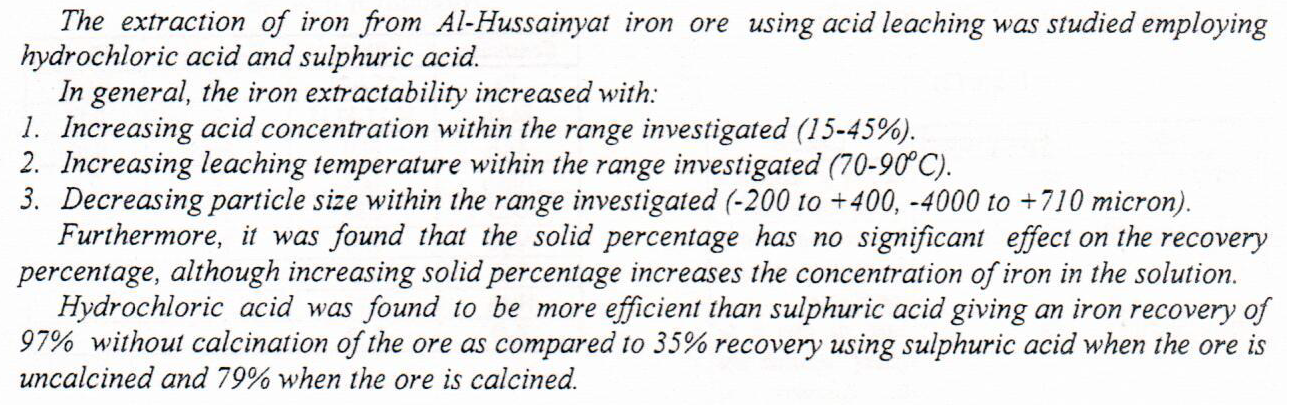
Extraction of Iron from Al-Hussainyat Iron Ore using Acid Leaching

 (2)
(2)


 (40)
(38)
(40)
(38)
 (11)
(9)
(6)
(2)
(9)
(10)
(5)
(11)
(9)
(6)
(2)
(9)
(10)
(5)
Lead-acid batteries have been used increasingly in recent years in solar power systems, especially in homes and small businesses, due to their cheapness and advanced development in manufacturing them. However, these batteries have low voltages and low capacities, to increase voltage and capacities, they need to be connected in series and parallel. Whether they are connected in series or parallel, their voltages and capacities must be equal otherwise the quality of service will be degraded. The fact that these different voltages are inherent in their manufacturing, but these unbalanced voltages can be controlled. Using a switched capacitor is a method that was used in many methods for balancing voltages, but their respons
... Show More
(2)
(1)
This research has been prepared to isolate and diagnose one of the most important vegetable oils from the plant medical clove is the famous with Alaeugenol oil and used in many pharmaceuticals were the isolation process using a technique ultrasonic extraction and distillation technology simple
The performance of a batch undivided electrochemical reactor with a rotating cylinder electrode of woven-wire (60 mesh size), stainless steel 316, is examined for the removal of copper from synthetic solution of o.5 M sodium chloride containing 125 ppm at pH ≈ 3.5. The effect of total applied current, rotation speed on the figures of merit of the reactor is analyzed. For an applied current of 300 mA at 100 rpm, the copper concentration decreased from 125 to mg l-1 after 60 min of electrolysis with a specific energy consumption of 1.75 kWh kg-1 and a normalized space velocity of 1.62 h-1. The change in concentration was higher when the total applied currents were increased because of the turbulence
... Show MoreIndustrial wastewater containing nickel, lead, and copper can be produced by many industries. The reverse osmosis (RO) membrane technologies are very efficient for the treatment of industrial wastewater containing nickel, lead, and copper ions to reduce water consumption and preserving the environment. Synthetic industrial wastewater samples containing Ni(II), Pb(II), and Cu(II) ions at various concentrations (50 to 200 ppm), pressures (1 to 4 bar), temperatures (10 to 40 oC), pH (2 to 5.5), and flow rates (10 to 40 L/hr), were prepared and subjected to treatment by RO system in the laboratory. The results showed that high removal efficiency of the heavy metals could be achieved by RO process (98.5%, 97.5% and 96% for Ni(II),
... Show More