Gas Holdup in a Bubble Column
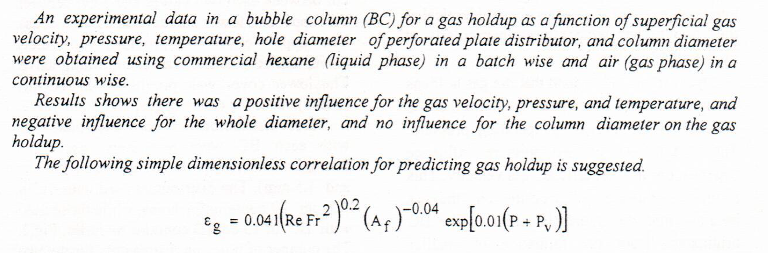

 (64)
(64)
 (54)
(54)


 (40)
(36)
(40)
(36)
This article aims to provide a bibliometric analysis of intellectual capital research published in the Scopus database from 1956 to 2020 to trace the development of scientific activities that can pave the way for future studies by shedding light on the gaps in the field. The analysis focuses on 638 intellectual capital-related papers published in the Scopus database over 60 years, drawing upon a bibliometric analysis using VOSviewer. This paper highlights the mainstream of the current research in the intellectual capital field, based on the Scopus database, by presenting a detailed bibliometric analysis of the trend and development of intellectual capital research in the past six decades, including journals, authors, countries, inst
... Show More
(83)
(65)
(34)
(30)
Pathology reports are necessary for specialists to make an appropriate diagnosis of diseases in general and blood diseases in particular. Therefore, specialists check blood cells and other blood details. Thus, to diagnose a disease, specialists must analyze the factors of the patient’s blood and medical history. Generally, doctors have tended to use intelligent agents to help them with CBC analysis. However, these agents need analytical tools to extract the parameters (CBC parameters) employed in the prediction of the development of life-threatening bacteremia and offer prognostic data. Therefore, this paper proposes an enhancement to the Rabin–Karp algorithm and then mixes it with the fuzzy ratio to make this algorithm suitable
... Show More
(2)
(1)
(64)
(37)
(37)
(5)
(5)
(58)
(50)
Cassava, a significant crop in Africa, Asia, and South America, is a staple food for millions. However, classifying cassava species using conventional color, texture, and shape features is inefficient, as cassava leaves exhibit similarities across different types, including toxic and non-toxic varieties. This research aims to overcome the limitations of traditional classification methods by employing deep learning techniques with pre-trained AlexNet as the feature extractor to accurately classify four types of cassava: Gajah, Manggu, Kapok, and Beracun. The dataset was collected from local farms in Lamongan Indonesia. To collect images with agricultural research experts, the dataset consists of 1,400 images, and each type of cassava has
... Show More
(9)
(5)