Production of Castor Oil for Medical Uses
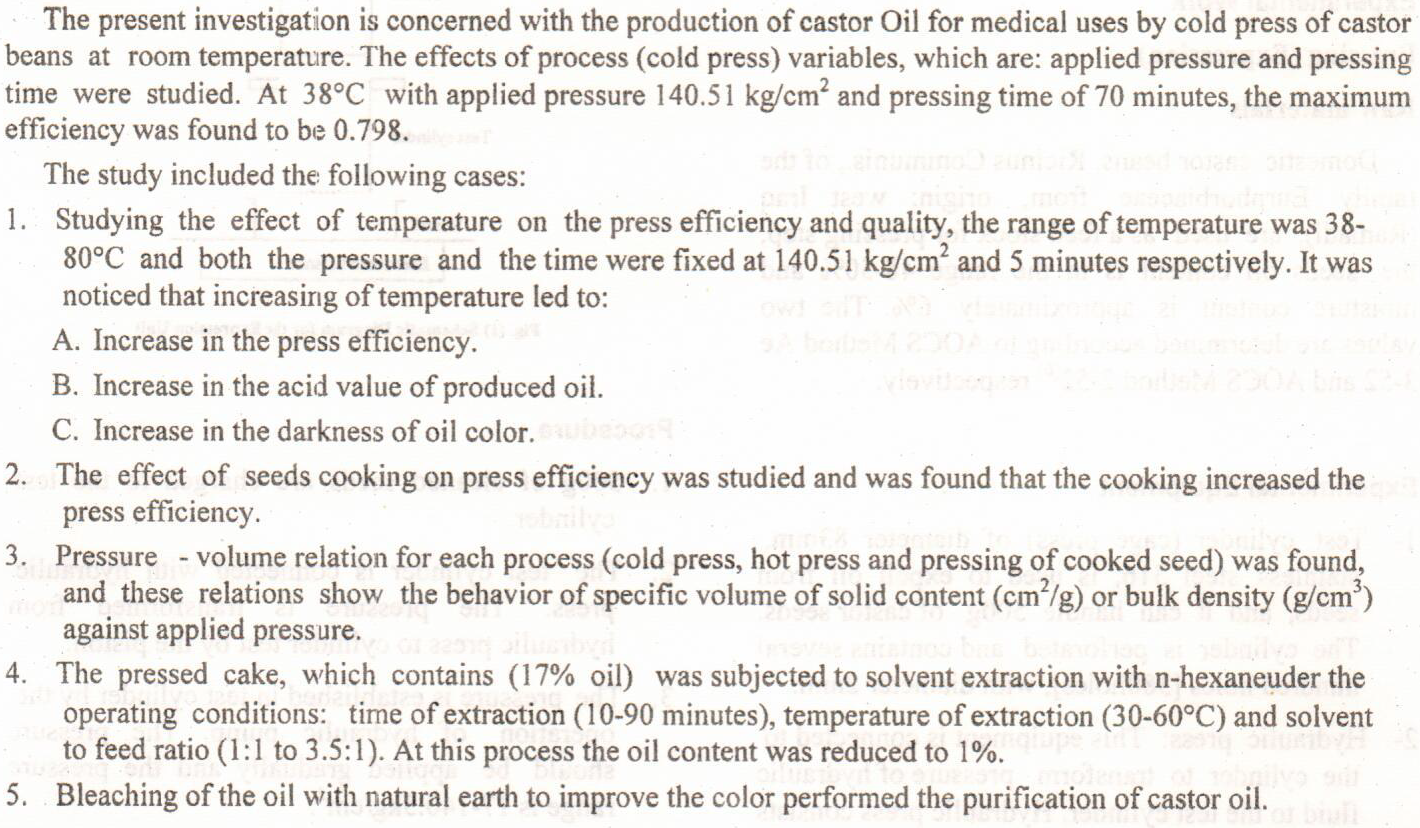


 (14)
(14)
 (12)
(12)


Many oil and gas processes, including oil recovery, oil transportation, and petroleum processing, are negatively impacted by the precipitation and deposition of asphaltene. Screening methods for determining the stability of asphaltenes in crude oil have been developed due to the high cost of remediating asphaltene deposition in crude oil production and processing. The colloidal instability index, the Asphaltene-resin ratio, the De Boer plot, and the modified colloidal instability index were used to predict the stability of asphaltene in crude oil in this study. The screening approaches were investigated in detail, as done for the experimental results obtained from them. The factors regulating the asphaltene precipitation are different fr
... Show More
(10)
(3)
(4)
This study proposes a mathematical approach and numerical experiment for a simple solution of cardiac blood flow to the heart's blood vessels. A mathematical model of human blood flow through arterial branches was studied and calculated using the Navier-Stokes partial differential equation with finite element analysis (FEA) approach. Furthermore, FEA is applied to the steady flow of two-dimensional viscous liquids through different geometries. The validity of the computational method is determined by comparing numerical experiments with the results of the analysis of different functions. Numerical analysis showed that the highest blood flow velocity of 1.22 cm/s occurred in the center of the vessel which tends to be laminar and is influe
... Show More
(3)
Intelligent or smart completion wells vary from conventional wells. They have downhole flow control devices like Inflow Control Devices (ICD) and Interval Control Valves (ICV) to enhance reservoir management and control, optimizing hydrocarbon output and recovery. However, to explain their adoption and increase their economic return, a high level of justification is necessary. Smart horizontal wells also necessitate optimizing the number of valves, nozzles, and compartment length. A three-dimensional geological model of the As reservoir in AG oil field was used to see the influence of these factors on cumulative oil production and NPV. After creating the dynamic model for the As reservoir using the program Petrel (2017.4), we
... Show More
The research aims to present a proposed strategy for the North Oil Company, and the proposed strategy took into account the surrounding environmental conditions and adopted in its formulation on the basis and scientific steps that are comprehensive and realistic, as it covered the main activities of the company (production and exploration activities, refining and refining activities, export and transport of oil, research and development activity, financial activity, information technology, human resources) and the (David) model has been adopted in the environmental analysis of the factors that have been diagnosed according to a
... Show More
يهدف البحث الى تقديم استراتيجية مقترحة لشركة نفط الشمال ، وأخذت الاستراتيجية المقترحة بنظر الاعتبار الظروف البيئية المحيطة واعتمدت في صياغتها على اسس وخطوات علمية تتسم بالشمولية والواقعية ، اذ انها غطت الانشطة الرئيسية في الشركة (نشاط الانتاج والاستكشاف , نشاط التكرير والتصفية , التصدير ونقل النفط , نشاط البحث والتطوير , النشاط المالي , تقنية المعلومات , الموارد البشرية ) وقد اعتمد نموذج (David) في التحليل البيئي
... Show MoreWere arranged this study on two sections, which included first section comparison between markets proposed through the use of transport models and the use of the program QSB for less costs , dependant the optimal solution to chose the suggested market to locate new market that achieve lower costs in the transport of goods from factories (ALRasheed ,ALAmeen , AlMaamun ) to points of sale, but the second part has included comparison of all methods of transport (The least cost method ,Vogels method , Results Approximations method , Total method) depending on the agenda of transport, which includes the market proposed selected from the first section and choose the way in which check the solution first best suited in terms
... Show More
